
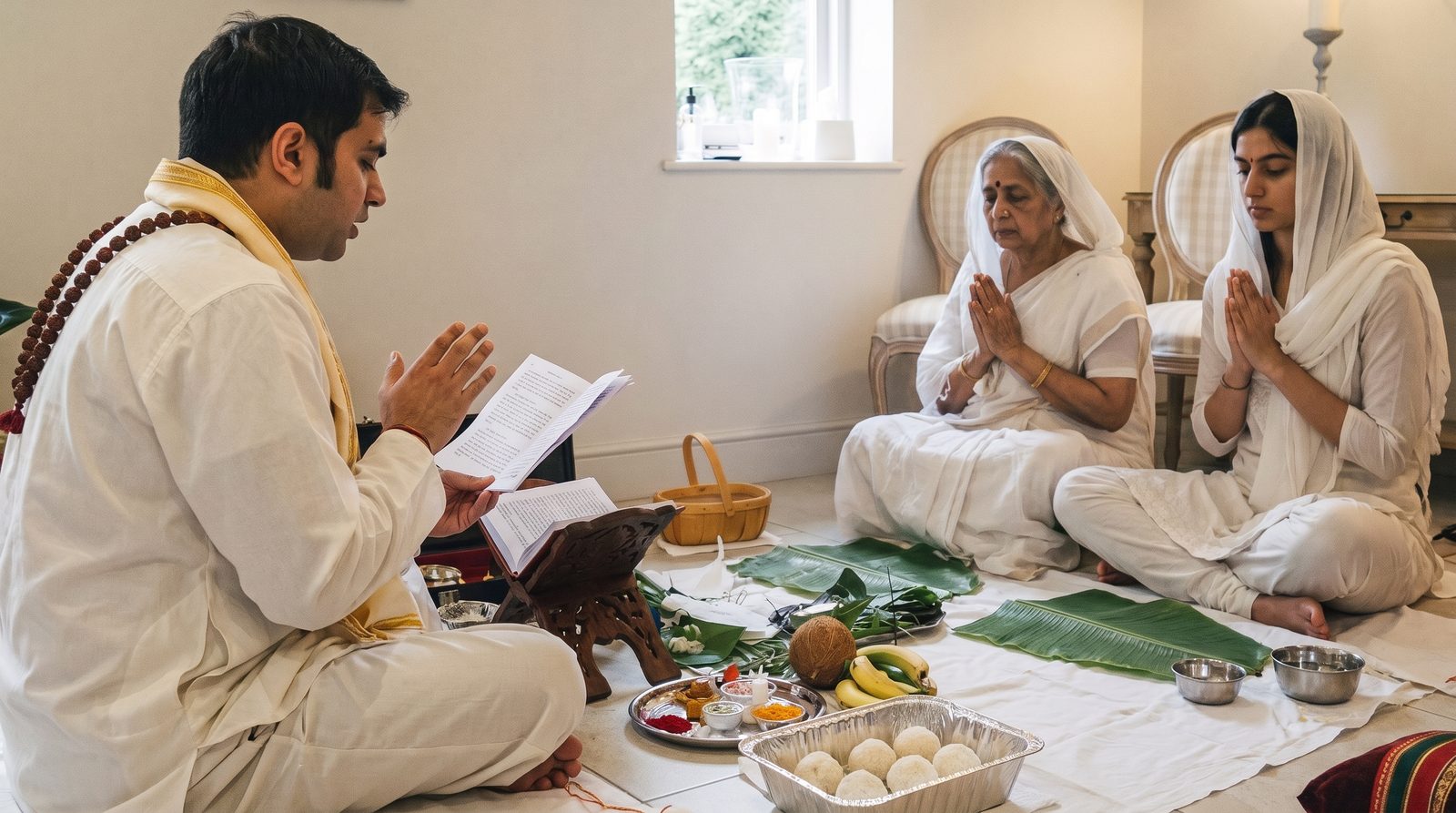
Indian & Asian Funeral Directors in North West London
We arrange Indian and Asian funerals across every London borough. The Five Ks stay with the body, your family washes and dresses, and we book the earliest slot and the extended time the rites actually need.
We arrange funerals across Brent, Camden and Harrow — including Neasdon, Roundwood, Camden Town, Belsize Park, Roxeth and Stanmore.
Hindu and Sikh funeral rites in North West London
Hindu and Sikh families follow different rites, so we set them out separately rather than as one list.
Hindu — Antyesti
- 1
Immediately after death
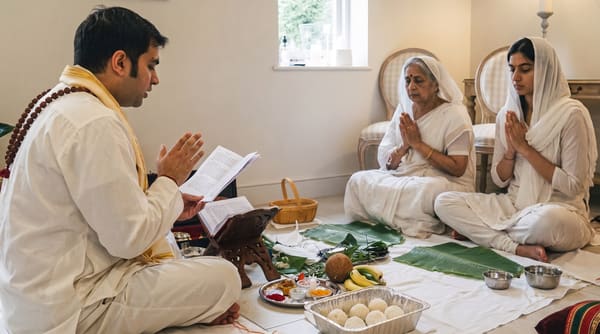
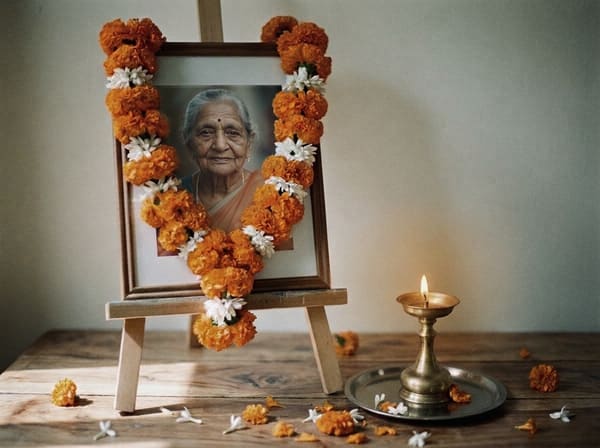
What happens: A diya is lit near the head, incense is burned, and tulsi leaves or Ganga jal may be placed in the mouth. A pandit leads prayers, often at home.
What we do: We collect at any hour, and we can bring the deceased home or give you a private room at our premises.
- 2
Preparation
What happens: The family wash and anoint the body and dress it in white or in the deceased's finest clothing. Embalming is usually declined.
What we do: We never embalm without your explicit instruction. We provide the space, the time and any practical help you want.
- 3
Timing
What happens: Tradition calls for cremation within 24 hours. UK registration and cremation paperwork make that impossible; two to four days is realistic for a straightforward case.
What we do: We begin the registration and paperwork the day you call and book the earliest slot available. We tell you the real date.
- 4
At the crematorium
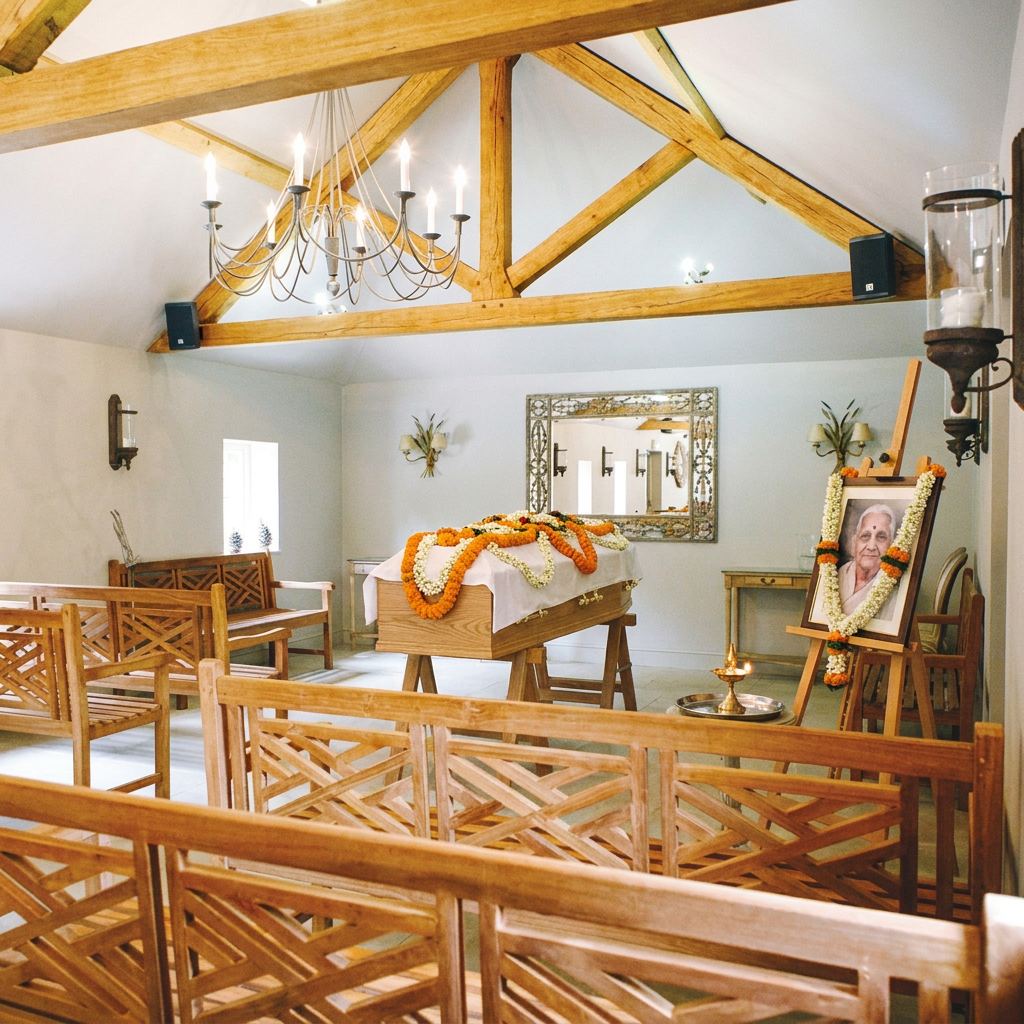
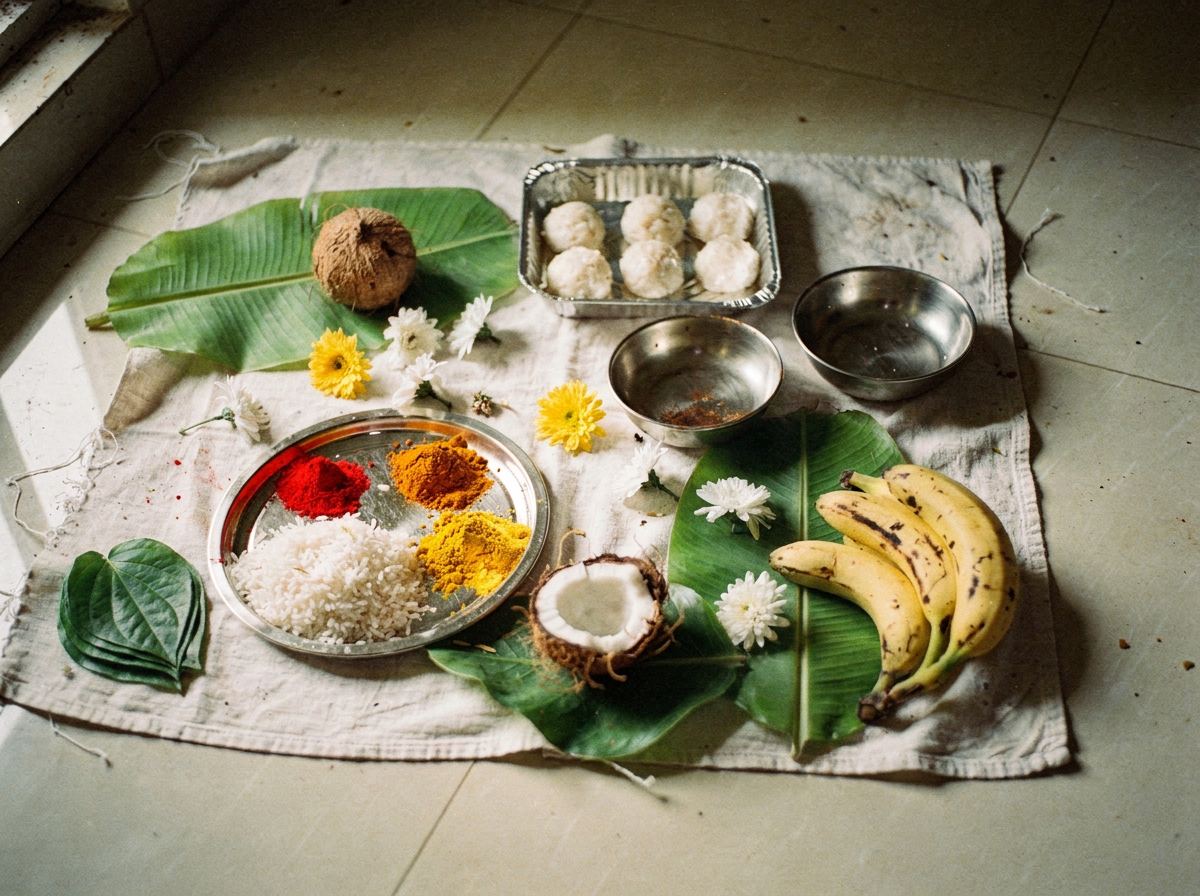
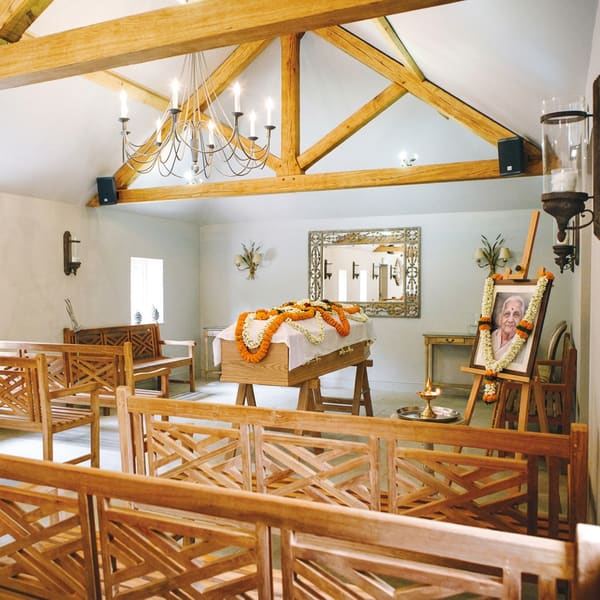
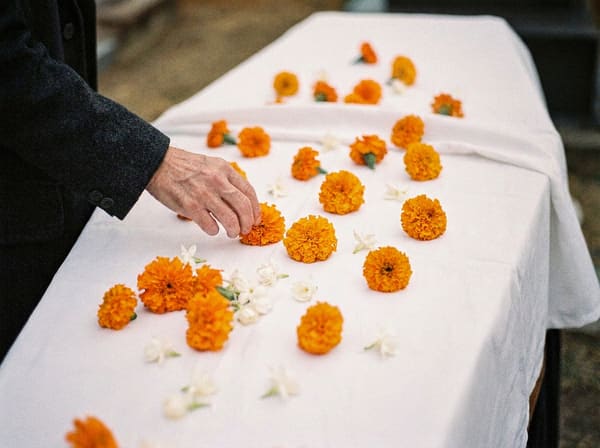
What happens: The coffin is usually open. Garlands and flowers are placed around the body and mourners may circle it clockwise. Sanskrit verses and the Gayatri Mantra are recited, aarti is performed, and offerings of ghee, flowers or rice may be made.
What we do: We book an extended or double slot as standard, arrange open-coffin viewing and coordinate your pandit.
- 5
The committal
What happens: The chief mourner — traditionally the eldest son, and increasingly a daughter or another close relative — performs the final act. Where the pyre would once have been lit, this becomes pressing the committal button.
What we do: We confirm with the crematorium in advance who will do this and what is permitted.
- 6
Witnessing the charging
What happens: Some families wish to see the coffin enter the cremator.
What we do: We arrange it where the crematorium permits it. The table below shows which London crematoria do.
- 7
The ashes
What happens: Ashes are collected and immersed in running water — ideally the Ganges at Varanasi, Haridwar or Prayagraj. In the UK, families use the Thames or the open sea.
What we do: We arrange collection, a sealed urn suitable for air travel, and the repatriation paperwork.
- 8
The mourning period
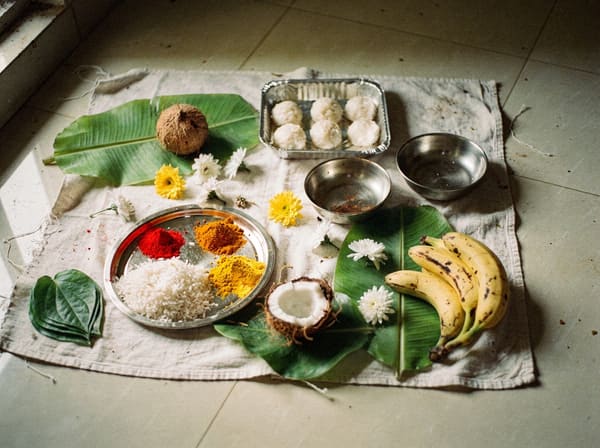
What happens: Thirteen days of mourning under a priest's guidance, concluding with Terahvin, the 13th-day Shraddha, followed by annual Shraddha rites.
What we do: We work to your thirteen-day timetable, not ours.
Sikh — Antam Sanskar
- 1
Immediately after death
What happens: The family is told first. There is no organised lamentation; excessive mourning is discouraged in Sikh practice.
What we do: We collect at any hour.
- 2
Preparation
What happens: The family wash and dress the body as an act of seva. The Five Ks must remain with the body and must not be removed: Kesh, kept covered, Kara, Kanga, Kachera and Kirpan.
What we do: Every member of our team and every partner we use is briefed on the Five Ks from your first call. We never embalm without your explicit consent.
- 3
The readings
What happens: A reading of the Guru Granth Sahib Ji begins before the funeral — an Akhand Path, read continuously over about forty-eight hours, or a Sahaj Path, read over about ten days.
What we do: We coordinate the funeral timings around your Gurdwara's readings.
- 4
At the Gurdwara
What happens: Everyone covers their head, and shoes are removed.
What we do: We coordinate transport and timings between the home, the Gurdwara and the crematorium.
- 5
The service
What happens: Kirtan Sohila is recited, Ardas is offered, and a Ragi sings Kirtan. The eldest son or a close relative traditionally initiates the cremation.
What we do: We book an extended slot, coordinate the Granthi and Ragi, and confirm in advance with the crematorium who will initiate.
- 6
The Bhog ceremony
What happens: The Sahaj Path is concluded at the Gurdwara with final readings, Kirtan, Ardas, the Hukamnama and Karah Parshad, followed by langar for everyone who attends.
What we do: We work to the Bhog date.
- 7
The ashes
What happens: The ashes, called phul, are collected and immersed in flowing water — the nearest river or the sea, or taken to the rivers of Punjab.
What we do: We arrange collection, a sealed urn suitable for air travel, and the repatriation paperwork.
- 8
What Sikh practice does not include
What happens: There are no monuments, headstones or memorials over the remains, no idol worship, and no Shradh ceremonies.
What we do: We will never suggest them.
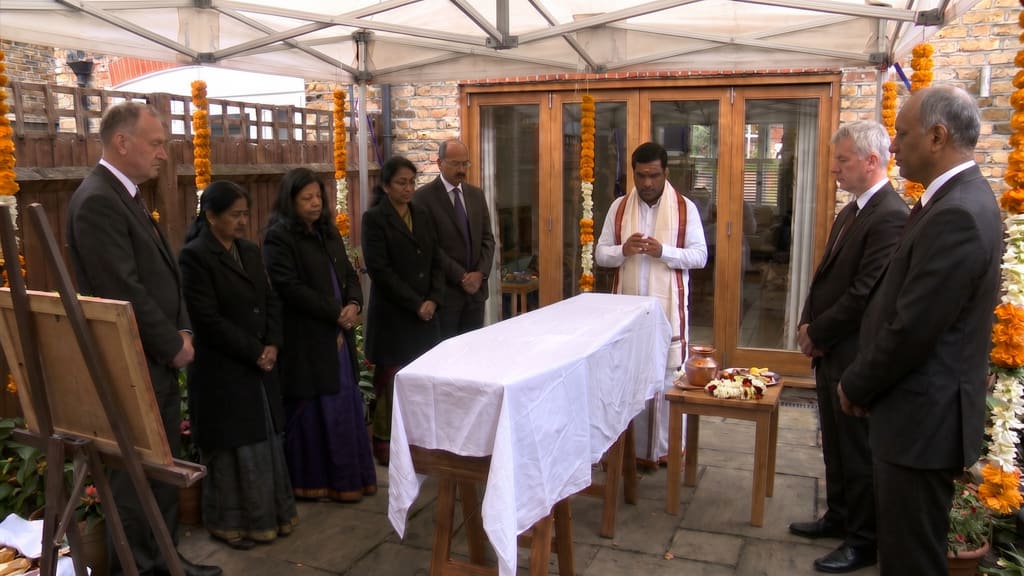
Hindu tradition asks for cremation within 24 hours; Sikh practice asks for it as soon as possible.
UK registration and cremation paperwork mean a straightforward Hindu funeral is realistically two to four days and a Sikh funeral five to seven.
We start the paperwork the day you call and book the earliest slot available — and we tell you the real date, not the one you want to hear.
More support for your family
Cremation options in North West London
What each crematorium allows for a Hindu, Sikh or Jain service. Where a detail is not shown we will confirm it with the crematorium before anything is booked.
| Crematorium | Chapel | Witnessed committal | Open coffin | Naked flame | Earliest slot |
|---|---|---|---|---|---|
| Golders Green Crematorium from £535 | 150 seats | — | — | — | — |
| St Marylebone Crematorium from £495 | 140 seats | — | — | — | — |
| West London Crematorium from £470 | 100 seats | — | — | — | — |
| Breakspear Crematorium from £558 | 100 seats | — | — | — | — |
Mandirs and gurdwaras
We will work closely with your chosen place of worship and family representatives as the arrangements take shape.
What we do, and what you do
What we do
- ✓Arrange a private, unhurried time in our preparation room for your family to wash and dress your loved one, usually on the day before the funeral, with at least an hour set aside and more if you need it.
- ✓Never remove or disturb the Five Ks. Kesh, kara, kanga, kachera and kirpan stay with your loved one throughout, and every member of our team caring for them is briefed before they begin.
- ✓Bring the coffin to your home, or to the mandir or gurdwara, before the crematorium if you wish, in our hearse, and plan the timings so the service is not rushed.
- ✓Arrange open-coffin viewing at our chapel of rest for your family, and tell you in advance how many people the room can hold.
- ✓Check with the crematorium, before the day, exactly what it permits: garlands, flowers, ghee, personal items and naked flame.
- ✓Confirm whether your chosen crematorium allows a family member to press the button and whether the charging of the coffin can be witnessed, and book it if so.
What you do
- ✓Tell us who in your family will wash and dress your loved one, and bring the clothes, turban, sari or other items you would like them dressed in.
- ✓Let us know which of the Five Ks, or any other religious items, you wish to place yourselves.
- ✓Decide whether the coffin should go home or to the mandir or gurdwara first, and give us the address and timings agreed with the priest or granthi.
- ✓Tell us roughly how many people will attend the viewing so we can plan the chapel of rest.
- ✓Bring the garlands, ghee and personal items you plan to use, so we can check them against the crematorium's rules.
- ✓Choose who will press the button or witness the charging, where the crematorium permits it.
Ashes, immersion and repatriation
Immersion in UK rivers
No permit is needed if you follow Environment Agency guidance: scatter more than 1km upstream of any point where water is taken for drinking, away from buildings, bathers, anglers and marinas, as close to the water surface as possible, and not when it is windy.
Personal items, wreaths, flowers, and containers made of plastic or metal must not go into the water or be left on the bank. This directly affects Hindu and Sikh immersions, which usually involve garlands and a container, so plan what will go into the water and what you will take home.
Permission from the landowner to reach the water is a separate matter that the Environment Agency guidance does not cover.
Open-air pyres
Open-air pyres are not available in England.
The 2010 Court of Appeal decision in R (Ghai) v Newcastle City Council is widely misreported as having legalised them. It did not. It held only that “building” in section 2 of the Cremation Act 1902 bears a wider meaning than an enclosed, roofed structure, so such a facility could be lawful.
Cremation outside an authorised crematorium remains illegal, and no such facility has been built.
Funerals we have arranged
Trusted local funeral directors in North West London
We are local funeral directors serving North West London and the surrounding areas of London. Families across North West London trust us to arrange caring, dignified funerals with complete transparency and never any pressure — whether a simple cremation, a traditional service or a greener, natural farewell.
We know North West London well, including Brent, Harrow and Camden, and we regularly arrange services at the local crematoriums and cemeteries here such as West London Crematorium, Willesden New Cemetery and St Marylebone Crematorium, as well as nearby churches, mosques, temples and registry offices. From paperwork to the order of service, we take care of the details so you have less to worry about.
Our funerals start from a clear, fixed price with no deposit and no hidden costs, and most families in North West London save considerably compared with the local average. Call us any time for a transparent quote, or create one instantly online.

Frequently asked questions
Yes. We can arrange a private viewing in our chapel of rest so you and your family can spend time with your loved one before the funeral. Just let us know and we'll make all the arrangements.
1. If the death happens at home, call the GP (or NHS 111 out of hours) so a doctor can confirm it. If it happens in hospital, the staff will guide you and arrange the medical certificate.
2. Register the death, usually within five days, at your local register office. We can help you book the appointment.
3. Call us whenever you're ready, day or night. We'll bring your loved one into our care and talk you through the next steps.
No. We never ask for a deposit. You'll receive a clear, itemised quote, and payment in full is due 3 working days before the funeral. We'll talk you through your payment options with no pressure and no hidden costs.
Yes, we offer flexible payment options to help spread the cost of the funeral. Speak to our team and we'll talk you through what's available and find an arrangement that works for you.
Yes. We regularly support families using the DWP Funeral Expenses Payment and can help you check your eligibility and complete the paperwork. Use our quick eligibility checker or call us and we'll guide you through it.
We offer a range of greener choices, including woodland and natural burials, eco-friendly coffins such as wicker and cardboard, and services that minimise environmental impact. Let us know what matters to you and we'll talk through the options.
Our funerals start from a clear, fixed price with no hidden fees, and most families save significantly compared with the average local funeral cost. You can build an instant quote online or call us for a transparent breakdown tailored to your wishes.
Yes. We offer pre-paid funeral plans that let you set out your wishes and fix the cost at today's prices, giving you and your family peace of mind. Speak to our team to find out more.